How DSCR Loans Florida Help Investors Scale Faster
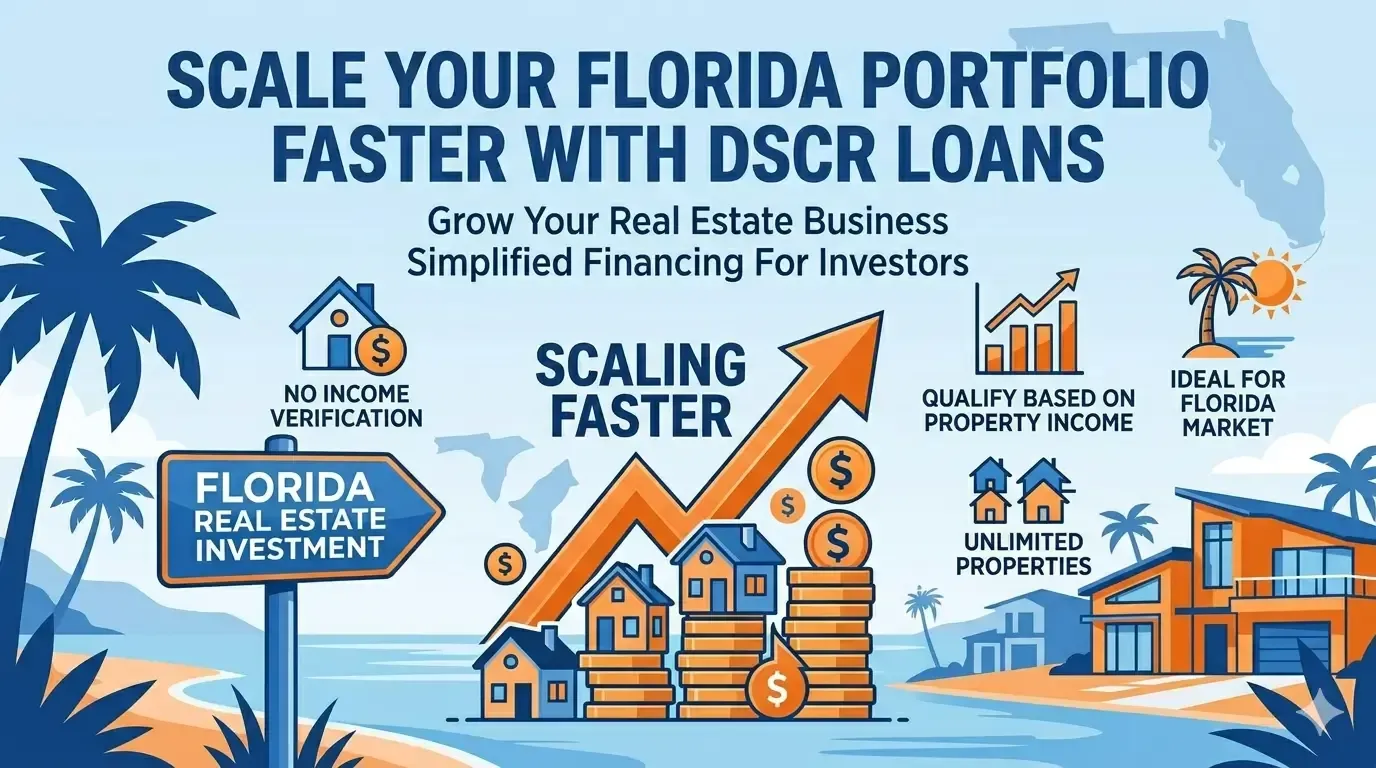
How DSCR Loans Florida Help Investors Scale Faster
Real estate investing in Florida is more competitive and rewarding than ever. With a strong rental market, steady population growth, and laws that favor landlords, the Sunshine State keeps drawing investors from all over the country. However, growing a portfolio involves more than just finding the right property; it also requires securing the right financing.
That’s where DSCR loans have become a game-changer for Florida investors. Unlike traditional mortgages, these loans are tailored specifically for real estate investors. Once you understand how they work, it’s easy to see why so many are using them to scale their portfolios faster than ever before.
What Is a DSCR Loan?
DSCR stands for Debt Service Coverage Ratio. It's a simple metric that measures whether a rental property generates enough income to cover its loan payments.
DSCR = Gross Rental Income ÷ Total Debt Obligations
A DSCR of 1.0 means the property breaks even. Most lenders prefer 1.25 or higher, meaning the property earns 25% more than needed to service the debt. What makes this loan type powerful is what it doesn't require. There are no W-2s, no tax returns, and no personal income verification. The property qualifies on its own based only on its rental income.
| DSCR Ratio | Meaning | Lender Perspective | Investor Takeaway |
|---|---|---|---|
| Below 1.0 | Property income is less than debt payments | High risk, likely won’t qualify | Negative cash flow; not sustainable |
| 1.0 | Break-even point | Acceptable but weak for approval | Covers payments but no profit margin |
| 1.15–1.25 | Moderate coverage | Typically the minimum required | Slight safety cushion, better chance of approval |
| 1.25+ | Strong coverage | Low risk, preferred by lenders | Positive cash flow, ideal for scaling |
The Core Advantage
Traditional bank financing is built for homeowners, not investors. As you acquire more properties, your debt-to-income ratio rises, your tax returns show more write-offs, and conventional lenders become increasingly reluctant to approve new loans. The very success that makes you a better investor works against you in a conventional lending environment.
DSCR loans remove that friction completely. Each property is judged based on its own performance. Your personal financial situation does not matter much. This means you can keep buying properties as long as each one meets the income requirements; there are no limits set by your personal finances.
Key benefits include:
- Each property qualifies based on its income, not the borrower’s.
- No personal income verification, W-2s, or tax returns required.
- No limits on how many properties you can finance.
- Your debt-to-income ratio doesn’t restrict portfolio growth.
- Simplified approval process tailored specifically for investors.
Why Florida Is the Perfect Market
Florida's rental market is one of the strongest in the country, and it's well-suited to DSCR financing for a few key reasons. The state's population is growing steadily. Many people are moving to Florida, which keeps rental demand high in areas like Jacksonville, Orlando, Tampa, and South Florida. High demand leads to low vacancy rates. This results in steady rental income, and that's what DSCR lenders want to see.
Florida also has a thriving short-term rental market. In tourist-heavy areas, Airbnb and VRBO properties can generate two to three times more income than long-term leases. Many DSCR lenders will factor in short-term rental projections when calculating your ratio, which can make properties qualify that wouldn't under standard long-term rental assumptions.
Add to that Florida's zero state income tax, and more of your rental income stays in your pocket. This improves your real returns on every property you own.
How Qualification Works
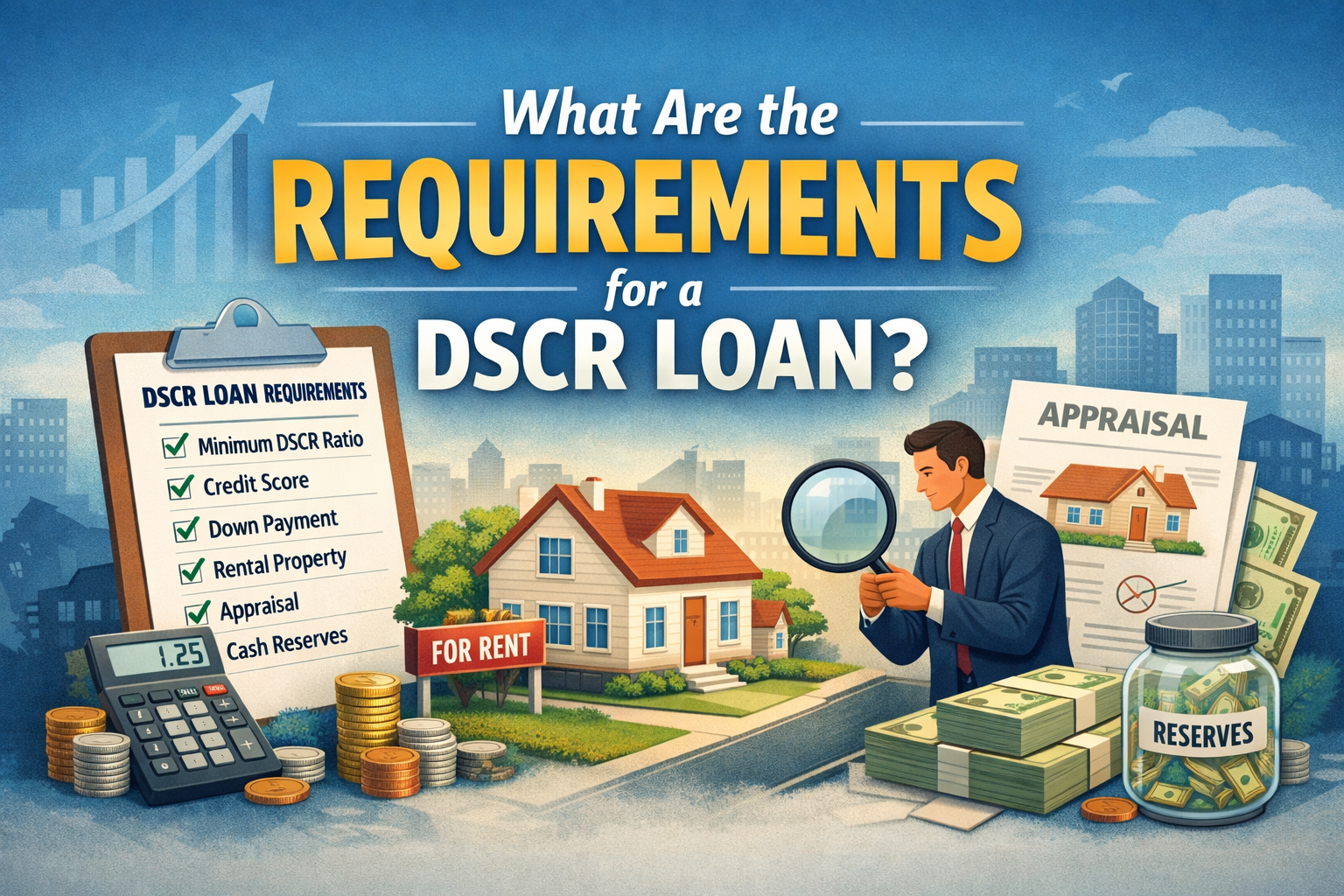
Qualifying for DSCR loans from Florida lenders is easier than many investors think. The main requirements usually include a minimum DSCR of 1.0 to 1.25, a credit score of at least 620, a down payment of 20 to 25 percent, and liquid reserves of six to twelve months of mortgage payments after closing.
The lender will order a property appraisal that includes a market rent analysis. That rental figure, not what you hope to charge, is what drives the DSCR calculation. This is why choosing the right property in a strong rental market is so important. The numbers need to stand on their own.
One important note: not all lenders are equal. Rates, terms, and approval speed vary significantly between institutions. Working with a lender who specializes in investment financing, rather than a regular retail bank, can save you time, money, and a lot of frustration.
Scaling With DSCR Financing
The real power of DSCR loans shows up in long-term portfolio building. Each loan works independently, so you can finance your tenth property just as easily as your first, as long as it cash flows well. Unlike conventional Fannie Mae loans, there is no limit on how many properties you can finance.
Cash-out refinancing is another tool investors use to grow quickly. Once a property has increased in value, a DSCR cash-out refinance allows you to withdraw equity without verifying your income. You can then use that money as a down payment for your next purchase. This process, often referred to as the BRRRR strategy, is one of the quickest ways to build a large portfolio. DSCR financing makes it possible to do this repeatedly, and you can read more about the underlying debt service coverage ratio concept on Wikipedia.
What to Watch Out For
The most common mistake investors make is overestimating rental income going into a deal. The lender's appraiser sets the market rent figure, not the investor. If your purchase price only works at an optimistic rent estimate, you may find yourself short of the required DSCR at the appraisal stage.
- The appraiser, not the investor, determines the official market rent used for DSCR.
- Deals that only work with overly optimistic rent projections often fail DSCR requirements.
- A lower-than-expected appraised rent can quickly push your DSCR below the lender’s minimum.
Operating expenses matter too. DSCR calculations use gross rental income, but your actual cash flow depends on property taxes, insurance, management fees, maintenance, and vacancy. Always model conservatively. A deal that barely clears a 1.25 DSCR on paper may not feel so comfortable in practice once expenses are accounted for.
- Include taxes, insurance, management, maintenance, and vacancy in your underwriting.
- Stress test deals with slightly lower income and higher expenses to see if they still work.
- Be cautious with properties that only “just” hit a 1.25 DSCR, as real-world costs can erode your cushion.
Is It Right for You?
DSCR loans are an excellent fit for self-employed investors, those with complex tax situations, and anyone who has already maxed out conventional financing options. They're also ideal for investors targeting Florida's short-term rental market, where income potential is high and the math often works strongly in your favor.
If your goal is to grow a rental portfolio in Florida efficiently and without the constraints of traditional lending, DSCR loans Florida lenders offer deserve a serious look. The structure is straightforward, the qualification process is clean, and the ceiling on growth is essentially removed.
Ready to Move Forward?
At The Money Express, we've closed hundreds of millions of dollars in commercial and residential investment loans nationwide. We understand what investors need — fast closings, competitive terms, and a team that knows how to get deals done.
If you're ready to explore DSCR financing for your next Florida investment property, reach out to us today. We'll walk you through your options and help you find the right structure for your goals.