Commercial Fix and Flip Loan Requirements
This is a subtitle for your new post
Buying a commercial property, renovating it, and selling it for a profit can be a great investment strategy. However, before you start your project, you need the right financing.
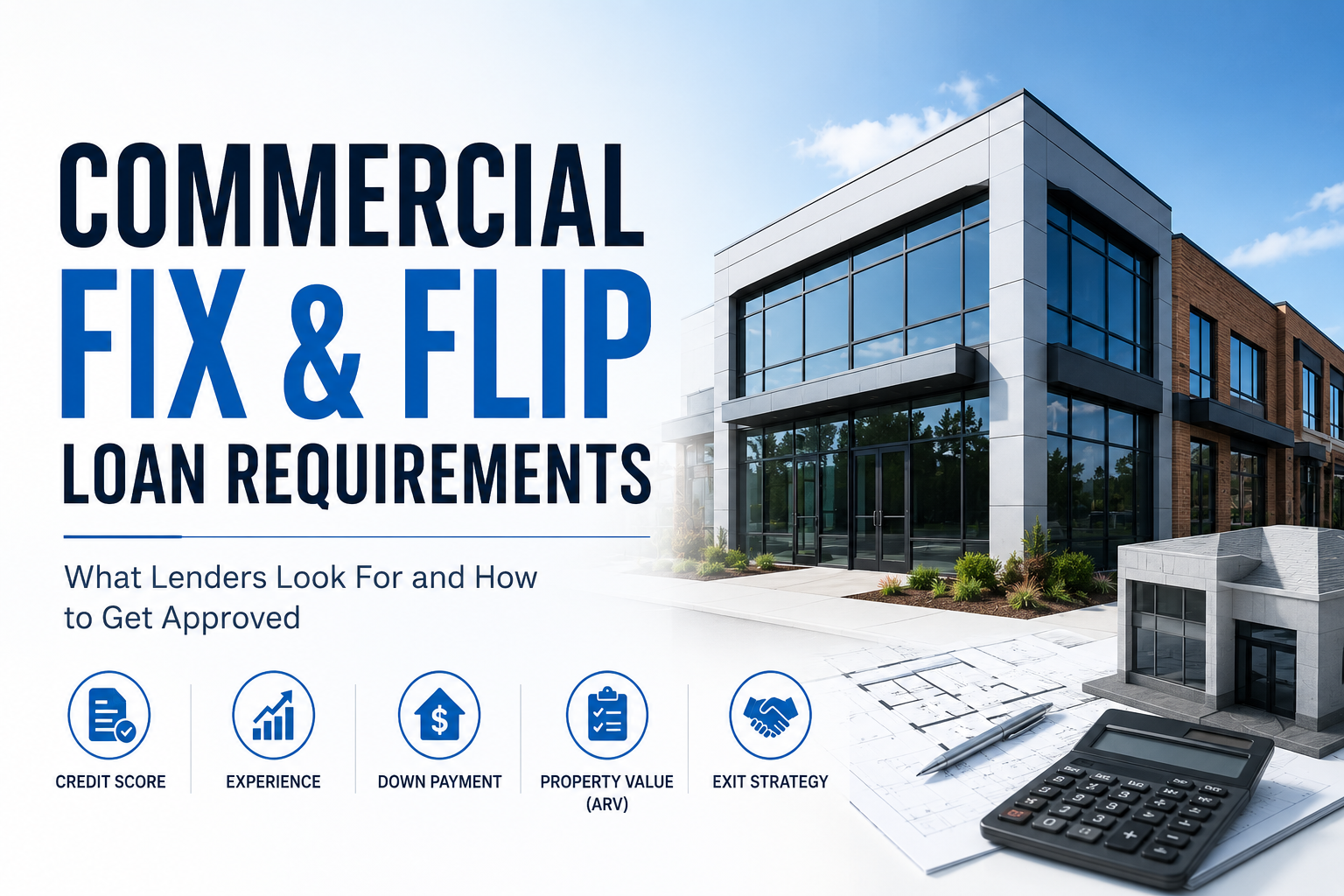
Understanding commercial fix and flip loan requirements can help you prepare your application and improve your chances of approval. While every lender has different guidelines, most look at the same key factors. They want to know if the property is a good investment, whether you can complete the renovation, and how you plan to repay the loan. Many lenders also review your experience, available cash, credit profile, and exit strategy before making a decision.
Commercial Fix and Flip Loan
A commercial fix and flip loan is a short-term loan used to purchase and renovate commercial investment properties. These loans are commonly used for office buildings, retail spaces, warehouses, mixed-use properties, and multifamily buildings.
Unlike a traditional commercial mortgage, a fix and flip loan focuses on the property's current value and its expected value after renovations. This future value is known as the after-repair value, or ARV.
Many lenders also consider the loan-to-cost ratio, the renovation budget, and your business plan before approving financing. A strong project with a realistic budget often has a better chance of approval than one with unclear renovation plans.
Commercial fix and flip loans are designed for investors who want to complete renovations quickly and sell the property within a short period.
Commercial Fix and Flip Loan Terms in 2026
Commercial fix and flip loan terms vary by lender, but most programs offer similar features.
Typical loan terms include:
- Loan Amount: $50,000 to $2.5 million or more
- Loan Term: Usually 12 months with extension options
- Maximum Leverage: Up to 80% loan-to-cost and around 65% to 70% of the after-repair value
- Interest Rate: Varies based on the project and borrower
- Credit Score: Many lenders prefer 620 or higher, while some private lenders focus more on the property than the credit score
- Property Type: Commercial investment properties only
- Loan Purpose: Property purchase, renovation, or both
- Repayment: Most loans require interest-only payments during the loan term
Some lenders also require borrowers to apply through an LLC or corporation. They may also ask for enough cash reserves to cover the down payment, renovation costs not included in the loan, and monthly interest payments.
Best Practices for Fixing and Flipping Commercial Real Estate
A successful fix and flip project requires more than financing. Careful planning at every stage helps reduce risk and improve returns.
1. Evaluate Properties
Start by choosing the right property.
Look at the location, local demand, rental activity, and nearby developments. Compare similar properties that have recently sold to estimate the property's future value.
Pay close attention to major repair issues. Roof damage, foundation problems, outdated electrical systems, and HVAC replacements can quickly increase renovation costs.
Choose projects where the expected profit is enough to cover financing costs, renovation expenses, and unexpected repairs.
2. Comprehensively Plan Your Renovations
Create a detailed renovation plan before work begins.
List every repair, estimate the cost, and build a realistic timeline. Small delays can increase interest costs and reduce profits.
Focus on improvements that add value. Updated interiors, better curb appeal, modern lighting, energy-efficient systems, and improved layouts often provide a stronger return than unnecessary upgrades.
A clear renovation plan also gives lenders more confidence in your project.
3. Secure the Best Financing
The right financing can make your project easier to manage.
Compare multiple loan offers before making a decision. Look beyond the interest rate. Review lender fees, closing costs, draw schedules, extension fees, and repayment terms.
Some lenders can close loans much faster than traditional banks. Fast funding can help you secure competitive properties before another buyer does.
4. Select Experienced Contractors
Your contractor plays a major role in the success of the project.
Choose contractors with experience in commercial renovations. Ask for references, review previous projects, and confirm that they have the proper licenses and insurance.
Reliable contractors help keep your project on schedule and reduce costly mistakes.
5. Market Your Property
Start preparing your marketing plan before renovations are complete.
Professional photos, accurate property information, and competitive pricing can attract qualified buyers more quickly.
Study current market conditions before setting the final asking price. Market values can change during a renovation, so review recent sales before listing your property.
Proper Financial Documentation
Having the right financial documents ready can make the loan approval process faster and easier. Most lenders want to see that you have the financial strength to complete the project and repay the loan. They also review your documents to understand the level of risk involved.
You should be prepared to provide recent personal and business financial statements, tax returns, and bank statements. These documents help lenders verify your income, available funds, and overall financial position. Keeping your records organized can prevent delays during underwriting.
Lenders also want to review information about the property itself. This often includes the purchase agreement, a detailed renovation budget, a scope of work, and a project timeline. Many lenders will order an appraisal or valuation to estimate the property's current value and its expected value after the renovations are complete.
Another important requirement is your exit strategy. Lenders want to know how you plan to repay the loan when the project is finished. You may plan to sell the property for a profit or refinance it into a long-term commercial loan. A clear exit strategy gives lenders more confidence in your project.
If you have completed successful fix and flip projects before, be ready to share that experience. A proven track record can improve your chances of approval and may help you qualify for better loan terms. Experienced investors often receive more flexible financing because they have demonstrated the ability to complete projects on time and within budget.
Choosing the Right Lender
Choosing the right lender is just as important as choosing the right property. Every lender has different lending requirements, approval times, and loan programs. Taking the time to compare your options can help you find financing that supports your investment goals.
Look beyond the interest rate when comparing lenders. Consider the total cost of the loan, including lender fees, closing costs, extension fees, and how construction funds are released during the renovation. A loan with a slightly higher interest rate may still be the better option if it offers faster funding or fewer restrictions.
It is also helpful to work with a lender that has experience financing commercial fix and flip projects. An experienced lender understands the renovation process and can often provide practical guidance throughout the loan term. This can help reduce delays and keep your project moving forward.
Before making a final decision, compare multiple loan offers and review the terms carefully. Finding the right lender can improve your financing experience and give you the flexibility to complete your project successfully.
Final Thoughts
Meeting commercial fix and flip loan requirements starts with preparation. Lenders want to see a strong property, a realistic renovation plan, solid financial documents, and a clear exit strategy.
Before applying, review your finances, organize your paperwork, and compare several loan options. Taking these steps can improve your chances of approval and help you secure financing that fits your investment goals.
The right commercial fix and flip loan can provide the capital you need to renovate properties, complete projects on time, and grow your real estate portfolio.